From Petrol Camry to Zeekr 7X: How a Sydney Townhouse Achieved Energy Independence with Solar & Battery
Transitioning a multi-person townhouse to clean energy requires creative planning, especially in historic, high-density areas where roof space is constrained and grid feed-in rates are low. For Robert, a professional residing in Sydney’s Inner West, the catalyst for this transition was a commitment to the planet’s future, aiming to drastically reduce his family’s household carbon footprint.
Living in a household of ~4 people, Robert designed an integrated energy ecosystem. By combining a large rooftop solar array, a SolarEdge battery storage system, and a brand-new Zeekr 7X electric vehicle (EV), he has insulated his home from retail utility price spikes. Over the past year, this system has kept the household’s net quarterly electricity bill under $150, saving up to $2,000 annually in electricity bills. On top of this, adopting an EV has delivered savings of over $2,000 in petrol costs.
Household & Property Profile
- Location: Inner West Sydney, New South Wales (NSW)
- Property Type: Owner-occupied townhouse
- Household Occupancy: ~4 people
- Primary Objective: Reducing the household’s carbon footprint while securing long-term energy independence.
System Design & Specs
Below is the technical specification of the townhouse’s integrated energy and transport hardware:
| System Component | Technical Details |
|---|---|
| Rooftop Solar | ~10 kW |
| Inverter | ~10 kW |
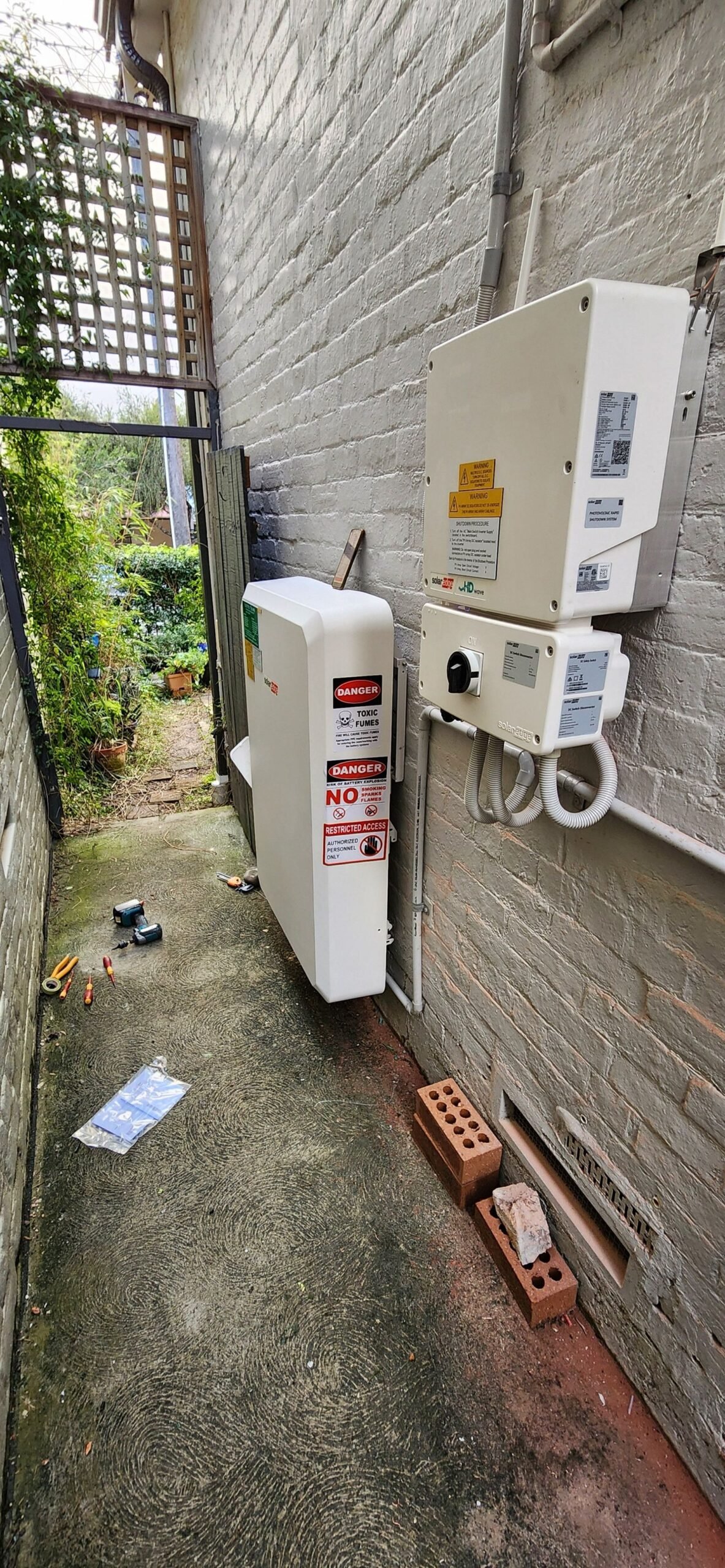
| Home Battery | SolarEdge |
| Battery Capacity | ~11 kWh |
| Primary Battery Strategy | Maximising savings, energy independence and blackout (reducing grid reliance via self-consumption and manual winter grid-charging). |
| Electric Vehicle (EV) | Zeekr 7X 2026 |
| EV Purchase | Novated lease (Salary packaging with FBT exemption) |
| Home Charging Setup | Standard wall plug (10A trickle charger – 2.4 kW) |
| Electricity Retailer & Plan | AGL (EV Saver night plan) |
Daily Operations & Smart Charging Strategy
Managing a high-draw EV charging load on a single-phase townhouse connection requires strategic scheduling. Robert transitioned the household’s primary transport in 2026 by replacing a 2014 Toyota Camry with a brand-new Zeekr 7X, financed under a novated lease to utilise the federal FBT exemption.
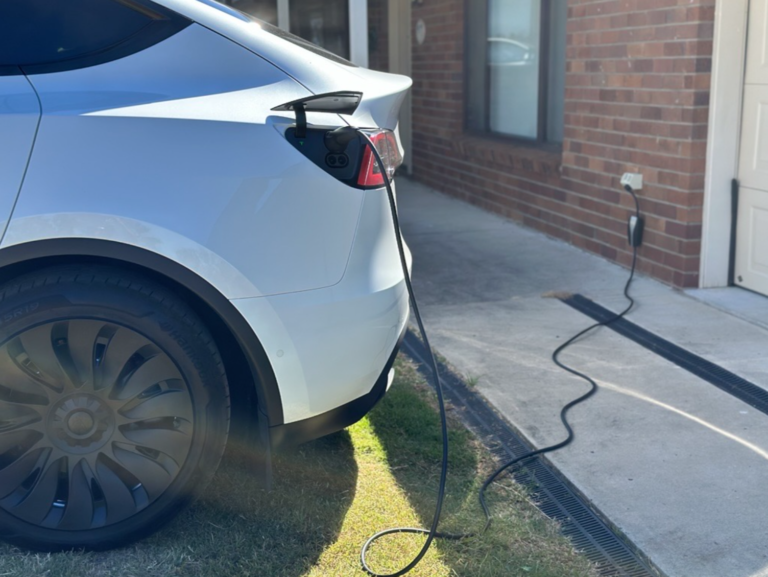
Rather than installing an expensive high-amperage dedicated wall box charger, Robert utilises a standard 10A wall plug (trickle charging at approximately 2.4 kW) for home charging. Charging is optimised through a combination of solar and scheduled AGL off-peak grid access designed for EV users:
Midday Solar Charging: The vehicle is plugged in during the day to absorb excess generation from the ~10 kW solar array.
Off-Peak Night Charging: Overnight charging is scheduled between 12:00 AM and 6:00 AM to align with AGL’s EV Saver night plan tariff which costs around 8 cents per kWh. This allows for six hours of overnight charging.
Because the Zeekr 7X has a large ~100 kWh battery pack, trickle charging provides a slow, steady top-up that easily covers Robert’s mostly urban/local driving. For context, an overnight 16 kWh charge costs Robert ~$1.30, providing roughly 100 km of local range the next day.
Public DC fast-chargers are used rarely, only on occasional long-distance road trips—where Robert views the brief wait not as an inconvenience, but as a welcome break. Beyond just drawing power, the Zeekr 7X serves as a mobile energy asset; Robert actively utilises the vehicle’s Vehicle-to-Load (V2L) capabilities to power appliances during camping trips and outdoor activities.
After less than a year of ownership, the vehicle’s real-world battery health remains excellent, maintaining 100% of its original 615 km WLTP range.
Robert calls the transition a resounding success. As for the likelihood of ever buying another petrol or diesel vehicle? ‘Extremely unlikely,’ he says.

Storage Operations & Electricity Plan Synergy
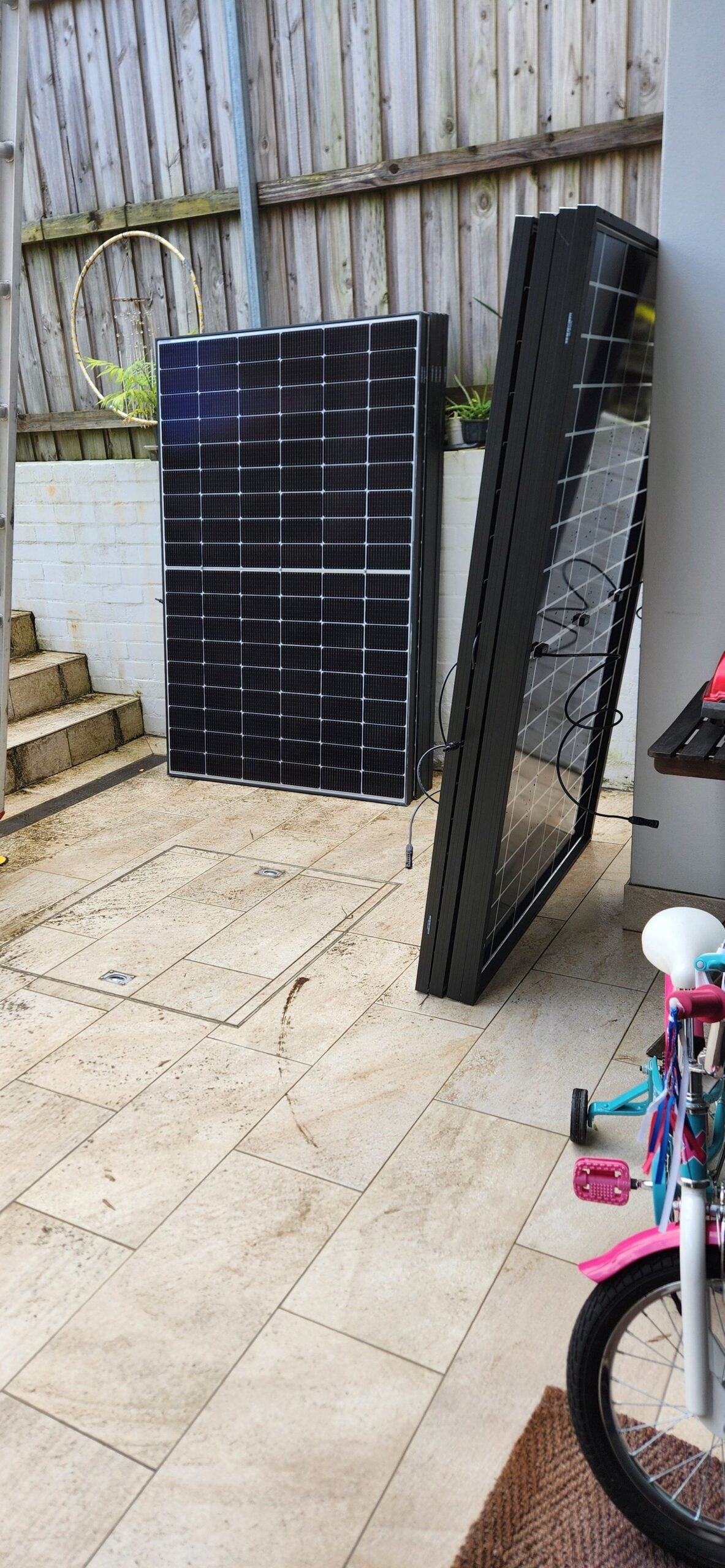
Robert paired the rooftop solar array with a ~11 kWh SolarEdge home battery and a ~10 kW inverter. The battery’s primary strategy is self-consumption (solar shifting), storing excess daytime solar generation (which would otherwise be exported at a low feed-in tariff of 1–4 c/kWh) to run the home during peak evening pricing. Robert prefers personal control and opted out of Virtual Power Plant (VPP) participation considering a home battery of this size is designed to cover peak grid usage, particularly overnight when there is no solar.
Robert has structured his household electricity habits to exploit the interaction between his battery storage and retail tariffs:
“AGL EV Saver plan works well with a home battery. We mostly charge the car during the day from solar. The EV Saver rates run our heat pump hot water system overnight when the battery is dry. We also schedule the battery to charge off cheap rates during winter or extended periods of rainy weather.” — Robert
During winter or long periods of wet weather, the SolarEdge battery is configured to charge from the grid during cheap overnight hours, ensuring the household has low-cost stored energy ready for the next day.
Financial Outcomes & ROI Analysis
By integrating solar, battery storage, and an EV, the household has achieved substantial savings across both transport and utility bills:
Transport Savings: The previous 2014 Toyota Camry averaged a fuel consumption of 8 L/100km. At an average petrol spend of $30 to $60 per week (midpoint of $45/week), the Camry cost the household:
$45/week * 52 weeks = $2,340/year.
By switching to the Zeekr 7X and charging primarily from a mix of solar and off-peak night rates, the monthly charging cost is estimated at under $20/month, resulting in an annual EV charging spend of:
$15/month * 12 months = $180/year.
This represents a net annual transport saving of:
$2,340 (Camry fuel cost) – $180 (Zeekr charging cost) = $2,160/year.
Electricity Savings: A typical household of 3 to 5 people in NSW faces an average annual electricity bill of $1,910 to $2,127. By offsetting peak grid draw with solar and battery shifting, Robert has reduced his net electricity bill to under $150 per quarter, saving approximately $1,500/year compared to standard grid bills.
Payback Period: The total investment for the solar and battery system was $20,500 (midpoint of the $16,000 to $25,000 range), installed in 2024 prior to the rollout of state battery rebates leading to higher cost.
The system’s payback period is calculated as follows:
~$20,500 (Total Net Investment) / ~$1,500 (Annual Electricity Savings) = ~13 Years.
Looking strictly at the electricity bill, the initial ROI appears modest due to the lack of federal and state battery subsidies in 2024. While adding a new EV involves its own separate vehicle capital cost, evaluating these components under an Integrated Strategy (Solar + Battery + EV Fuel Savings) reveals the true synergy. By using the solar array to offset both household power and charging, the massive drop in ongoing running costs effectively cuts the energy system’s payback period in half.
🔋 Got an EV, Solar, or a Home Battery?
Want to show how your setup works like Robert? Help us educate the community and support clean energy research in Australia. Take our quick 5-minute survey to share your setup!
Owner Reflections & Policy Recommendations
While the transition has been successful, Robert notes that strata laws and charging access remain significant hurdles for townhouse owners and renters.
To accelerate adoption across Australia, Robert recommends the following reforms:
Strata Reforms
Reforming strata laws to allow apartment and townhouse owners easier approvals for rooftop solar and EV charging infrastructure.
Renter Access
Providing portable solar and split-incentive schemes for landlords to enable renters to access clean energy tech.
Charging Infrastructure
Expanding public fast-charging networks to make road trips and charging accessible for those without dedicated home wall boxes.
As for his own energy ecosystem, Robert is already planning his next steps:
Future Upgrades & V2X Integration
Looking ahead, Robert views vehicle power export as the next logical step for his ecosystem. His next planned clean energy upgrade is a V2G (Vehicle-to-Grid) or bidirectional charging setup, allowing the vehicle’s massive battery pack to seamlessly supplement the home storage system and further insulate the household from upfront cost barriers.
Techwheel Editor’s Commentary
Robert’s Inner West townhouse setup highlights how single-phase properties can achieve high levels of self-sufficiency without requiring expensive or complex three-phase electrical upgrades.
By opting for a standard 10A wall plug charging at 2.4 kW, Robert avoids putting immediate strain on the townhouse’s limited single-phase allocation. This slow, steady draw perfectly aligns with his urban driving habits and fits comfortably within off-peak windows without risking tripped circuits.
Crucially, this setup leaves a clear upgrade path. If Robert’s daily mileage increases in the future, the single-phase connection can easily accommodate a dedicated 7.4 kW wall charger. This future-proof addition would deliver speeds up to three times faster than trickle charging, providing massive flexibility.
Rather than relying blindly on raw battery capacity, Robert brilliantly games the utility tariff structure. By scheduling the heaviest household draw—the heat pump hot water system—to run on AGL’s cheap overnight EV Saver rates when the battery runs dry, the SolarEdge system is preserved entirely for the home’s standard daytime and evening baseloads, artificially extending its effective capacity.
Wiping out petrol costs is what fundamentally makes the math work, but it requires the right vehicle acquisition strategy. Utilising the ATO’s Fringe Benefits Tax (FBT) exemptions on a novated lease dramatically lowers the upfront capital barrier of the EV itself. When paired with smart home energy management, this creates a highly reproducible roadmap for high-density townhouse electrification across urban Australia.