Managing an EV + PHEV Household: 12.5 kW Direct DC Charging with Home Storage in North-West Melbourne, Australia
💡 Community Spotlight: At Techwheel, all featured setup spotlights are submitted directly by real owners through our community survey. A huge thank you to Kelvin for sharing his actual energy generation, charging data, and financial returns to help others transition to clean tech!
For Australian families transitioning multiple vehicles toward zero-emissions driving, structuring a home charging strategy requires balancing vehicle range, battery capacity, and daily commuting habits. While adopting a full battery electric vehicle (BEV) provides long-distance capability, adding a plug-in hybrid (PHEV) for suburban commutes creates a highly efficient, dual-vehicle fleet.
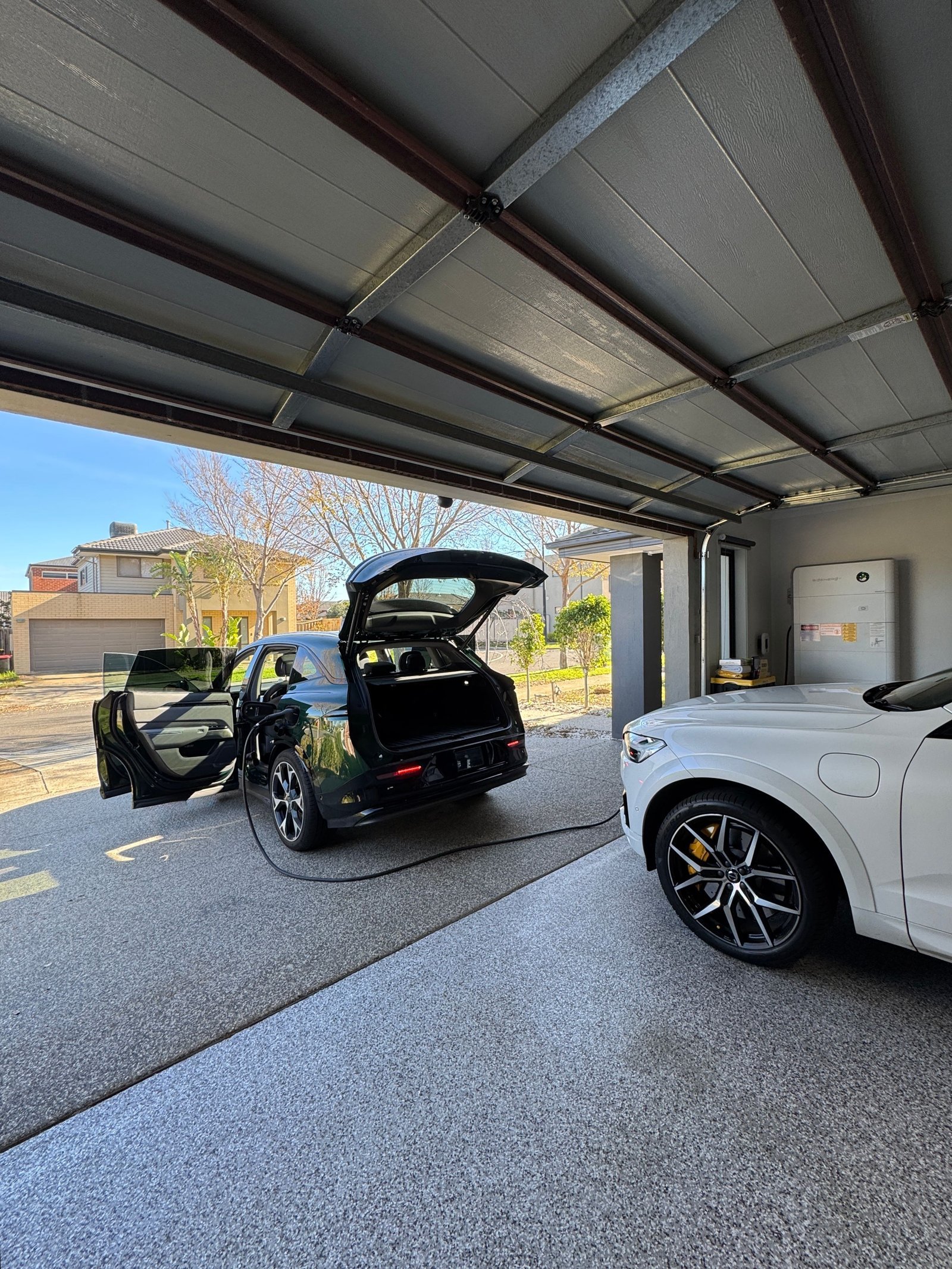
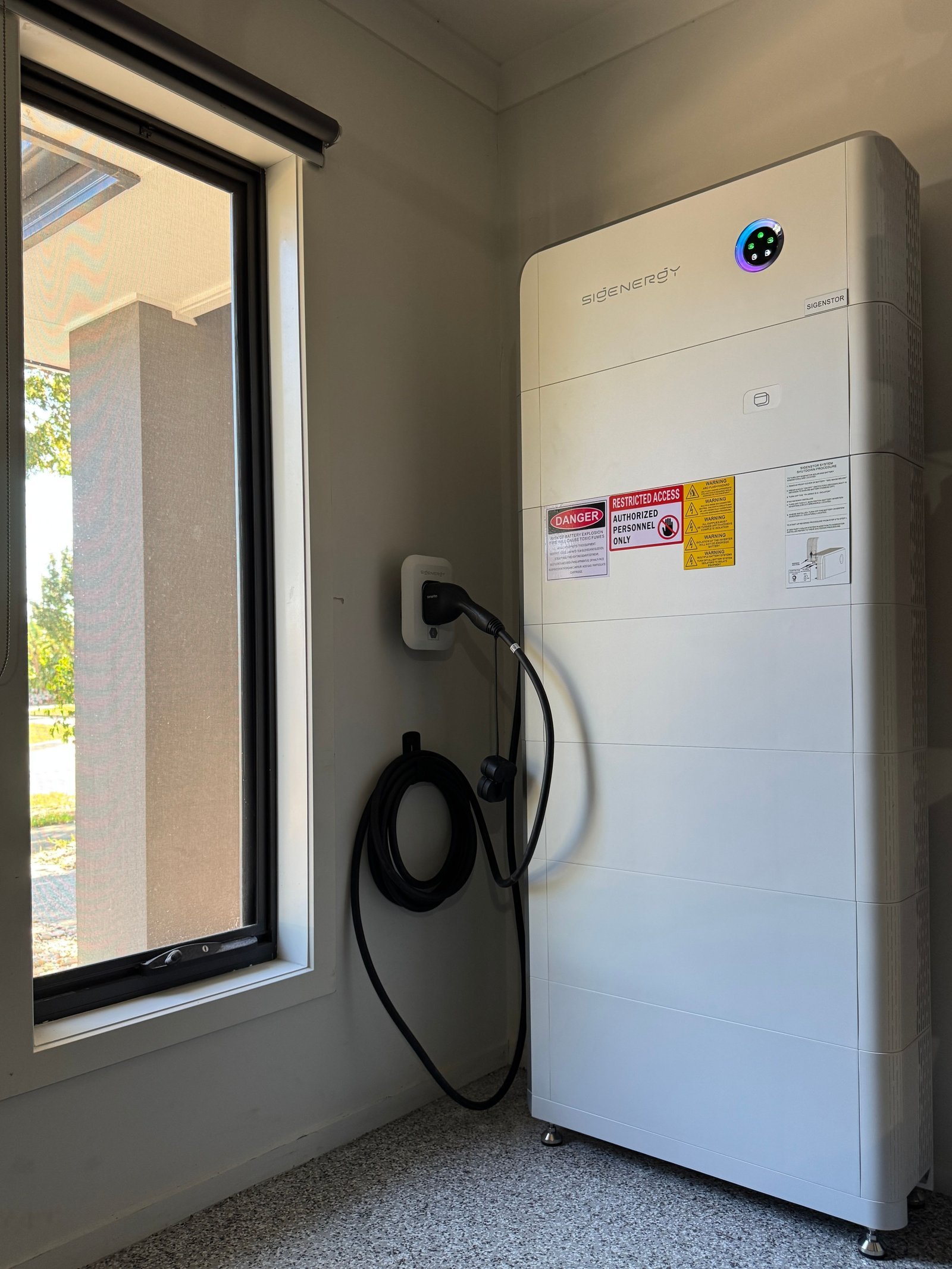
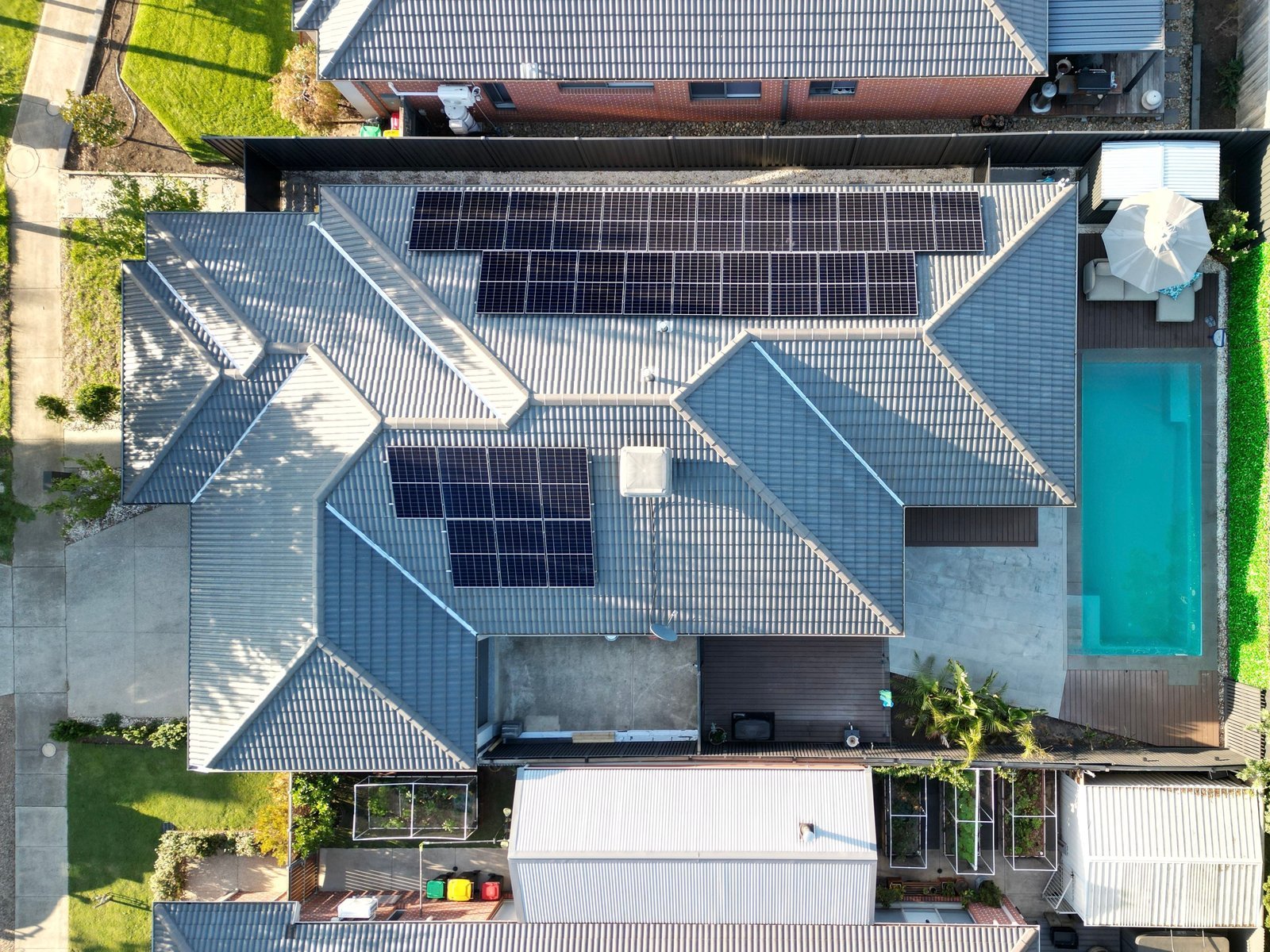
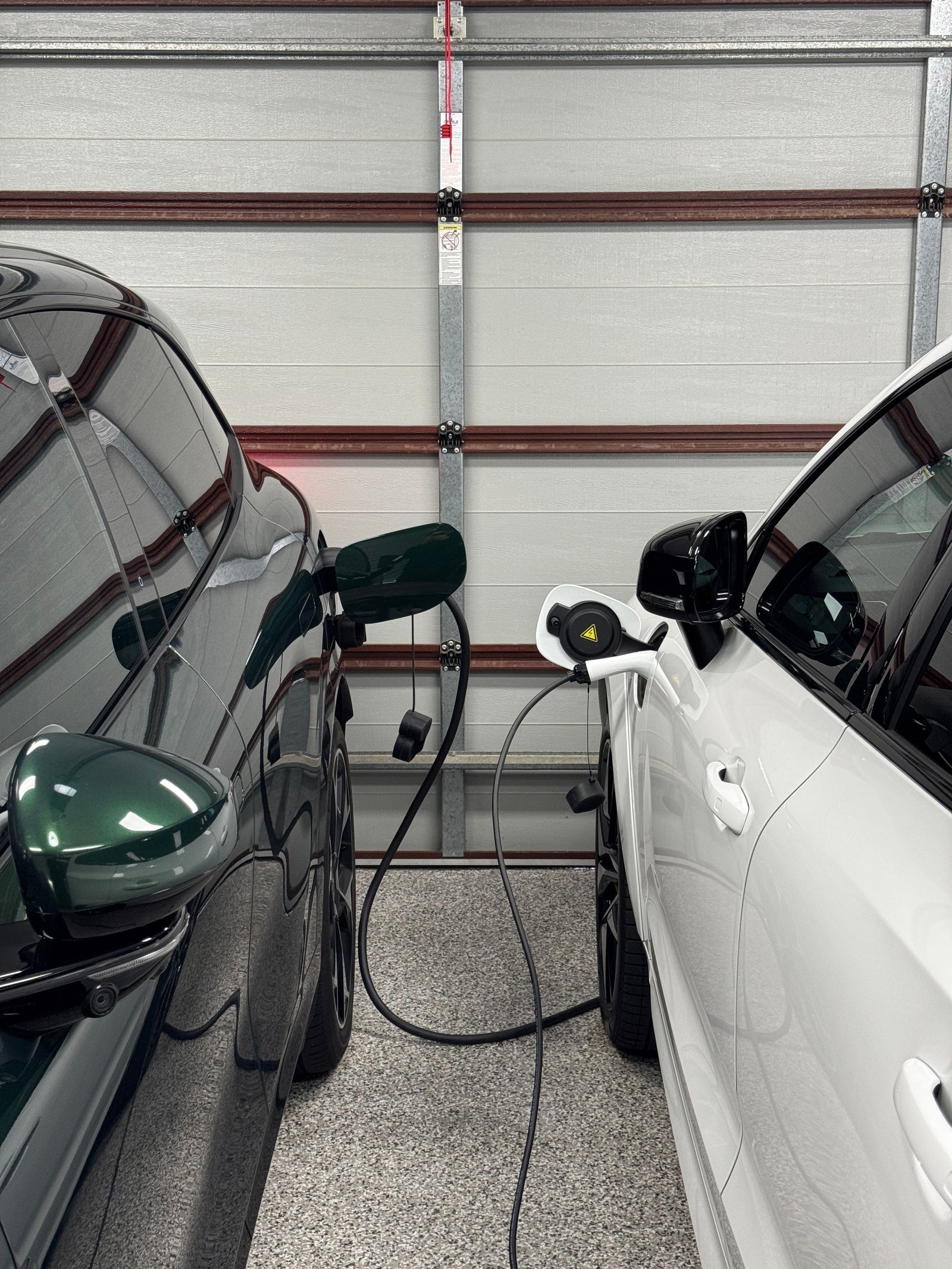
Kelvin, a professional residing in North-West Melbourne, Australia, has engineered a complete residential clean energy ecosystem for his two-vehicle household: a brand-new 2026 Zeekr 7X Performance AWD (BEV) and a second-hand 2021 Volvo XC60 T8 Polestar Engineered (PHEV). Powered by an 13.3 kW rooftop solar array, a high-capacity 40 kWh Sigenergy home battery stack, and a 12.5 kW SigenStor EV DC Charger, Kelvin charges both vehicles at near zero-cost on a standard single-phase residential connection.
Household & Property Profile
- Location: North-West Melbourne, Victoria (VIC)
- Property Type: Owner-occupied standalone house
- Household Occupancy: 2 people
- Primary Objective: Managing DC charging logistics for a dual BEV + PHEV fleet without expensive three-Phase grid upgrades, achieving zero running costs for local suburban trips.
Dual Fleet Dynamics: Brand-New BEV + Second-Hand Performance PHEV
Kelvin’s driveway presents an ideal real-world combination of electric hardware:
| Metric | 2026 Zeekr 7X (BEV) | 2021 Volvo XC60 (PHEV) |
|---|---|---|
| Role | Primary EV (New) | Second EV (Used) |
| Battery | ~95 kWh | ~11.6 kWh |
| Electric Range | 544 km | ~35 km |
| Full Charge Time | Free Energy Window | < 2 Hours |
| Annual Mileage | 10k – 20k km | 10k – 20k km |
Near Zero-Cost Suburban PHEV Commuting
The second-hand 2021 Volvo XC60 T8 Polestar Engineered combines twin-charged petrol power with a dedicated electric drive system fed by an ~18 kWh battery pack.
Rapid Charge Time: With an 11.6 kWh battery, plugging into Kelvin’s home charger restores full electric range in under two hours.
Zero-Cost Daily Commutes: By scheduling the Volvo’s short charge window during GloBird Energy’s free daily midday window (11:00 AM – 2:00 PM) or during peak rooftop solar output, daily local trips around Melbourne are powered entirely by zero-cost electricity.
Long-Distance Versatility: The Zeekr 7X handles long-distance touring with its 544 km pure-electric range, while the Volvo PHEV operates as a zero-emissions suburban commuter with petrol backup for extended trips.
Technical Specifications & Hardware Micro-Hub
Below is the hardware breakdown of Kelvin’s residential energy system:
| System Component | Technical Details |
|---|---|
| Rooftop Solar Capacity | Large ~13.3 kW Array (Installed 2025–2026) |
| Inverter Rating | 10 kW SigenStor Hybrid Inverter (Single-Phase) |
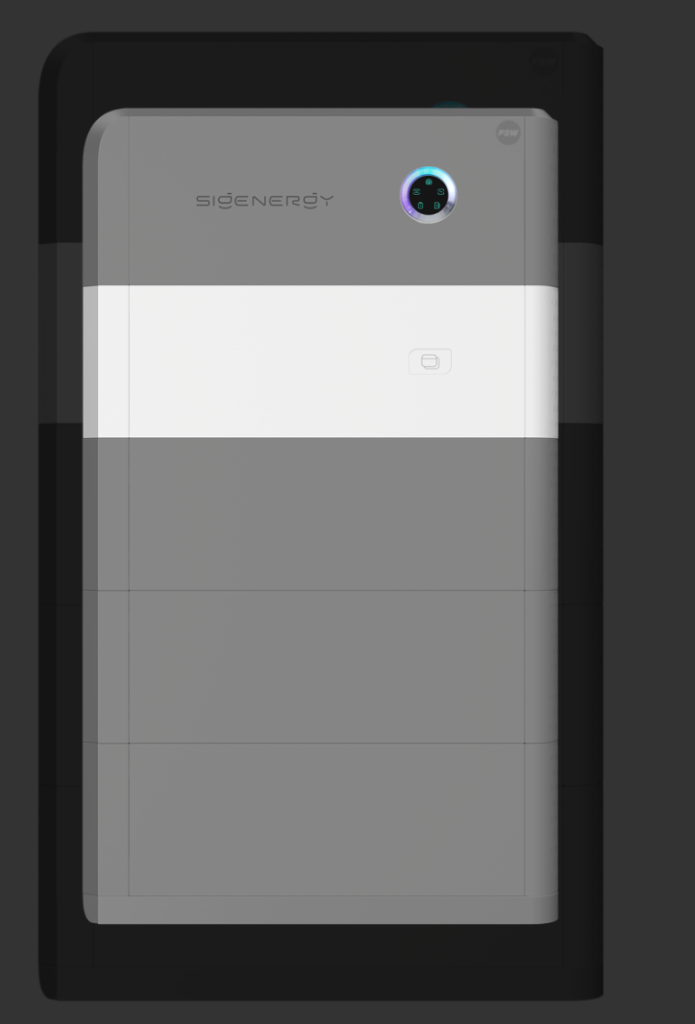
| Home Battery Hardware | Sigenergy SigenStor Stack (40 kWh) |
| EV Charger Hardware | SigenStor 12.5 kW EV DC Charger Module (Direct DC charging) |
| Primary Operating Strategy | Solar self-consumption (solar shifting) & off-peak grid arbitrage |
| Primary Vehicle (BEV) | 2026 Zeekr 7X Performance AWD (Brand New, ~95 kWh battery) |
| Second Vehicle (PHEV) | 2021 Volvo XC60 T8 Polestar (Second-Hand, ~18 kWh battery) |
| Electricity Retailer & Plan | GloBird Energy (Free daily midday hours plan) |
12.5 kW Direct DC Fast Charging on a Single-Phase Grid
Standard residential single-phase grid connections in Australia restrict AC vehicle charging to 32 Amps (~7.4 kW). Upgrading to a three-phase supply requires expensive distributor fees and costly main board rewiring.
Kelvin solved this single-phase speed limit by choosing Sigenergy’s SigenStor integrated hybrid architecture:
Direct DC Energy Transfer: The 12.5 kW EV DC Charger module attaches directly to the SigenStor DC bus, delivering power straight into the vehicle’s battery without converting through an onboard AC charger.
Simultaneous Solar + Battery Boost: On single-phase power, the charger draws energy from both the 13.3 kW rooftop solar array and the 40 kWh battery stack simultaneously, maintaining a steady 12.5 kW charge rate.
Optimised Daily Charging Window: Utilising GloBird Energy’s free 3-hour midday window (11:00 AM – 2:00 PM) delivers substantial daily range for both vehicles:
- Zeekr 7X (BEV): Receives ~37.5 kWh in 3 hours, adding roughly 250 km of driving range—enough to cover most weekly driving entirely for free.
- Volvo XC60 (PHEV): Fully replenishes its ~11.6 kWh battery in under 2 hours, achieving 100% state of charge for local suburban trips. The Volvo XC60 charges via standard AC power rather than DC.
“We got the 12.5 kW EVDC Charger. It’s a bit challenging sometimes to explain to people the advantages of it over an AC Charger given the cost upfront,” Kelvin shares regarding the technical choice.
Clean Energy Financial Benefits
By combining a second-hand PHEV with a new BEV and powering both from a 40 kWh battery micro-hub, Kelvin has unlocked high annual financial benefits:
1. Transport Fuel Savings
Before transitioning, Kelvin drove a performance 2021 Kia Stinger GT (Twin-Turbo V6) consuming 11 L/100km, spending $30 to $60 per week on premium unleaded (averaging $45/week).
Previous Petrol Expenditure: $45/week × 52 weeks = $2,340/year.
2026 Zeekr 7X (BEV): Requires ~900 kWh annually for 10,000 km (~17 kWh / 100 km). Powered 100% by free solar/grid charging = $0/year fuel cost (Saving ~$2,000/year compared to an equivalent luxury petrol SUV).
2021 Volvo XC60 PHEV (Conservative Split):
Assuming a 50/50 driving split across 10,000 km/year:
- 5,000 km Electric Suburban Commuting: Requires ~950 kWh annually, charged free windows/solar/battery = $0 fuel cost (Saving ~$450/year compared to petrol).
- 5,000 km Petrol / Hybrid Touring: Driven on the petrol engine (~5.5 L/100km of premium unleaded), costing ~$800/year in petrol.
- Net Volvo Fuel Savings: ~$450/year saved by displacing half its annual mileage with zero-cost electric driving.
Total Annual Transport Fuel Savings: ~$2,450 / year (saving thousands in fuel while maintaining complete road-trip flexibility).
2. Household Electricity Bill Elimination
A standard 2-person standalone household with pool in Victoria could face an average annual electricity bill of ~$3,000. Utilising an 13.3 kW solar array and a 40 kWh battery stack eliminates grid dependency, generating $3,000/year in total electricity savings.
Under the GloBird ZeroHero plan, Kelvin’s household has reduced running costs to approximately $11 per monthly billing cycle. Because the system avoids grid import during peak demand (6:00 PM – 9:00 PM), the household earns a $1/day credit, offsetting fixed daily supply charges.
During a representative 29-day winter cycle (June 14 – July 12):
- Total Monthly Bill: $11.63
- Total Energy Consumed: 1,454.43 kWh
- Household Base Load: 1,270 kWh (dominated by an 18 kW Daikin ducted heating system and pool pump)
- Home EV Charging (DC): 184.43 kWh (complemented by workplace charging)
- Grid Import: 921.62 kWh (maximized during the 3-hour free midday charging window)
3. Total Combined Annual Benefits
Combined Annual Clean Energy Benefit: $5,450/year.
These annual savings shield the household from rising grid rates and fuel price shocks today rather than relying on abstract payback projections. Although the comprehensive solar, 40 kWh battery, and DC charger setup required an initial $30,600 investment, it provides a fully future-proofed clean energy platform for years to come.
Overall, these figures represent a conservative estimate for a household operating in a similar dual-vehicle scenario. While actual savings will fluctuate—increasing if Kelvin charges more frequently via clean energy or decreasing if external fuel/grid reliance grows—they demonstrate the solid baseline financial value of an integrated home energy micro-hub.
Owner Reflections & Policy Recommendations
Kelvin emphasises that while high-capacity battery storage delivers independence, upfront hardware costs remain a primary barrier for Australian families.
To accelerate adoption nationwide, Kelvin recommends:
Upfront Hardware Subsidies: Direct rebates to reduce initial solar, battery, and DC charger costs, expanding federal support.
Public Fast-Charging Networks: Expanding reliable DC fast-charging along regional transport corridors.
Renter Access: Creating portable solar and battery options so renters can access clean energy savings.
DNSP Approval Streamlining: Streamlining distributor approvals for residential battery storage.
Techwheel Editor’s Commentary
Kelvin’s setup provides a blueprint for managing a dual BEV + PHEV fleet on a standard single-phase grid connection.
Key technical takeaways:
PHEV + BEV Synergies
Pairing a long-range BEV (Zeekr 7X) with a compact PHEV (Volvo XC60 T8) optimizes household utility. The PHEV’s ~18 kWh battery charges fully in ~2 hours, making zero-emissions local driving effortless while keeping petrol backup for long trips.
Direct DC Fast Charging
Connecting a 12.5 kW DC charger to the SigenStor DC bus bypasses single-phase 7.4 kW AC limits, saving thousands of dollars in distributor three-Phase upgrade costs.
40 kWh Battery Buffer
~40 kWh home battery stack ensures both vehicles can be charged without drawing expensive peak grid electricity, keeping monthly charging costs under $20.
Future-Proofing: The Power of Native Bidirectional DC Integration
While bidirectional Vehicle-to-Home (V2H) and Vehicle-to-Grid (V2G) technology has faced regulatory and standardisation delays across Australia, the Sigenergy SigenStor framework is engineered for native, hardware-level readiness. Once fully enabled, an EV transforms into a mobile mega-battery capable of running household loads for days during severe weather or blackouts.
Traditional bidirectional setups require external, costly AC-to-DC conversion boxes or complex multi-inverter configurations. By contrast, the Sigen EV DC Charging Module plugs directly into the SigenStor DC bus architecture—the same high-voltage direct-current pathway shared by the solar panels and stationary home battery modules.
For suburban households navigating multi-vehicle electrification, Kelvin’s system demonstrates the power of combining solar, battery storage, and direct DC vehicle charging.
🔋 Got an EV, Solar, or a Home Battery?
Your participation helps grow our community and supports vital clean energy research in Australia. Share how your setup works to help educate others. Take our quick 5-minute survey today!