Sold the house, lived out of a Tesla for a year, then went all-electric: Tom and Fran’s 145,000 km with only 159 fast charges
⚡ The setup in numbers
- The leap: Sold up and left the NSW Central Coast on 1 December 2022. Lived on the road for 12 months and about 50,000 km.
- The distance: About 145,000 km so far. That’s 91,000 km in a Model 3, 46,000 km in their current Model Y, plus about 8,000 km in a hire car in Europe.
- The charging: About 2,800 sessions. Only 159 were DC fast charges, and nearly two-thirds of the energy came in at home at under 11 kW.
- The home base: Emerald, Victoria, since December 2023. It has 13 kW of solar, three Powerwalls and a heat pump, and has been fully off gas since July 2026.
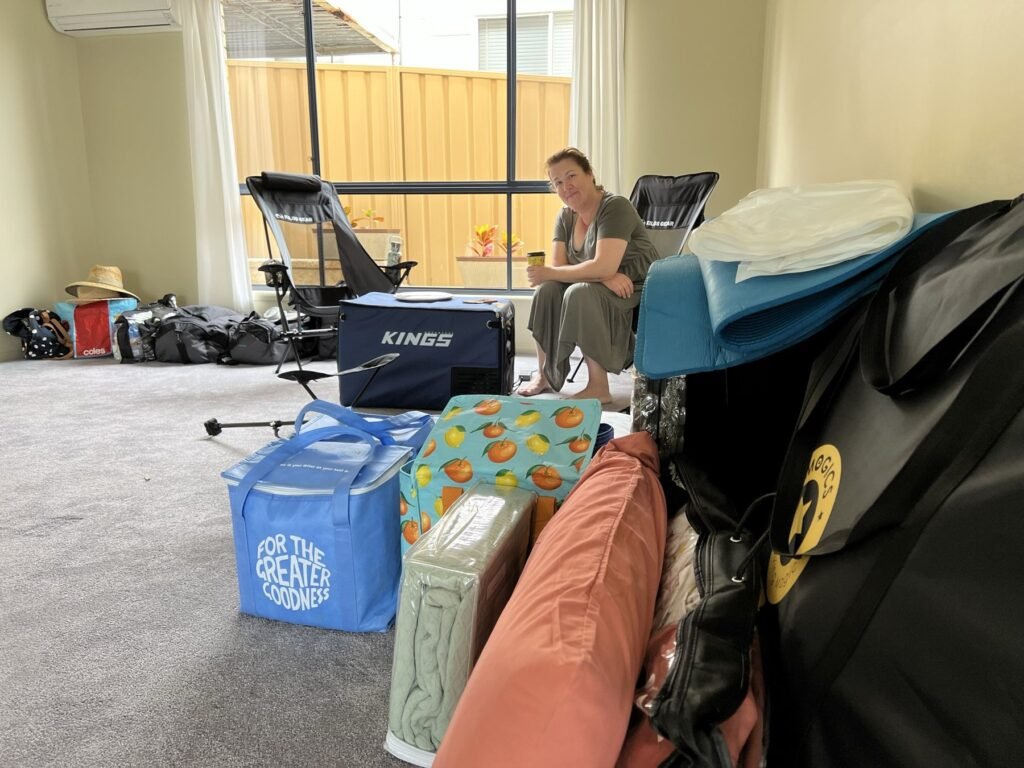
The last lunch was at Shelly’s Cafe. Then Tom and Fran squeezed a 50-litre fridge, a bed, chairs, a tent, food, clothes and two computers into a Tesla Model 3, and drove away from the only fixed address they had.
That was 1 December 2022. They had owned the car for exactly three months.
“Somehow we managed to fit all of that into the smallest car that Tesla make,” Tom wrote that day, in what became post number one.
There are now 1,612 posts on eTripping.au. Together they make one of the most detailed public records of what owning an EV in Australia really looks like, from the first year on the road to the house they eventually bought.
How it happened
The car arrived on 30 August 2022. Within three months, the house in Saratoga was gone.
They sold what they could and put the rest into storage. They’re self-employed, so work came with them on the laptops.
Tom had toured on motorbikes before, so a sedan already felt roomy. When a reader suggested they’d end up in a motorhome, he said no. He wanted something compact and efficient that was easy to park.
The blog was never really planned.
“Documenting it wasn’t really a decision,” Tom told Techwheel. “We were answering the same questions over and over at chargers, and writing it down was easier than repeating ourselves.”
A year with no address

The first loop went west to Dubbo, then north through Queensland to Cape Tribulation by 30 December. They came back down from Mackay to Bega and finished with the Great Ocean Road and the Grampians.
Along the way, they started looking for somewhere to live. They inspected houses in Woodend, Kyneton, Daylesford, Mount Evelyn and Alexandra, usually between charging stops.
The hard part turned out to be the loan, not the house.
Their “pre-approved” home loan needed more paperwork, which was hard to supply from the road. The pre-approval ran out after six months, just as banks were cutting new ones to three.
“I’m not sure how they expected buyers to find a home in such a short time,” Tom wrote.
They tried another lender for its fossil-fuel policy, but it also wanted recent financial records. Self-employed and a year on the road, they couldn’t easily provide them. A third bank finally accepted their previous year’s figures.
“It’s been a long road, figuratively and literally,” Tom wrote when the keys came through. By then, the first car had done about 50,000 km.
Landing in Emerald
In October 2023, they found a house in Emerald in Victoria’s Dandenong Ranges. Puffing Billy runs past the bottom of the hill.
They moved in on Christmas Eve 2023.
“There are still tubs and boxes to unpack,” Tom posted, “but at least we can cook, eat, and charge the car.”
The house didn’t end the road trips. It became the place the car charges up between them.
Nine days without power, except at their place
The house got its first real test two months later.
In February 2024, a storm cut power across Emerald for nine days. The house already had rooftop solar and a Tesla Powerwall.
“We were the only house in the street to still have power after the storm hit,” Tom wrote. They put a power board on the front porch so neighbours could charge their phones.
Then a stranger called Ben sent a text. He’d found their listing on PlugShare and needed enough charge to get his EV home to Pakenham. He plugged in for ten minutes, running on battery and a bit of solar.
Getting off gas, one appliance at a time

They didn’t do it all at once. Over the next two and a half years, they changed one thing at a time and wrote up the costs as they went.
The hot water figures are the clearest. Instant gas had cost them about $40 a month, plus the connection fee.
“Now we’re paying nothing, because the heat pump is just using our excess solar power,” Tom wrote. Without solar, he worked out it would cost about $8 a month from the grid.
The gas connection was the last thing to go.
“Our gas supply charge was 91.16 cents a day,” he wrote. “That is $333 a year for the pipe itself, before burning a single megajoule.”
Today the house sometimes makes more energy than it can use.
“Excess solar fuel is a welcome problem,” Tom wrote one autumn afternoon. The Powerwalls had been sitting near 100% for days and the car was nearly full too. “We ‘needed’ to go for a drive to use some of it up.”
Still on the road
Owning a house hasn’t kept them home.
In 2024 they hired a Model Y in Europe and drove about 8,000 km through the Netherlands, Switzerland, Italy and France. Back home, the robot mower they call Marvin kept the lawn short. By Tom’s account, that didn’t always go perfectly.
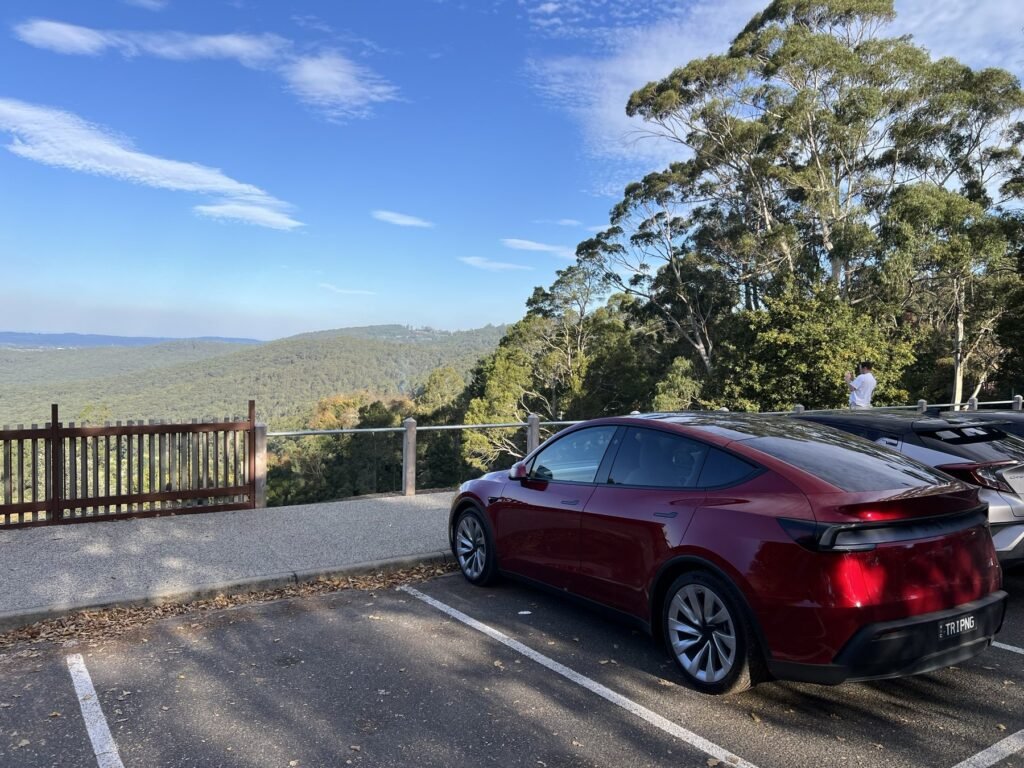
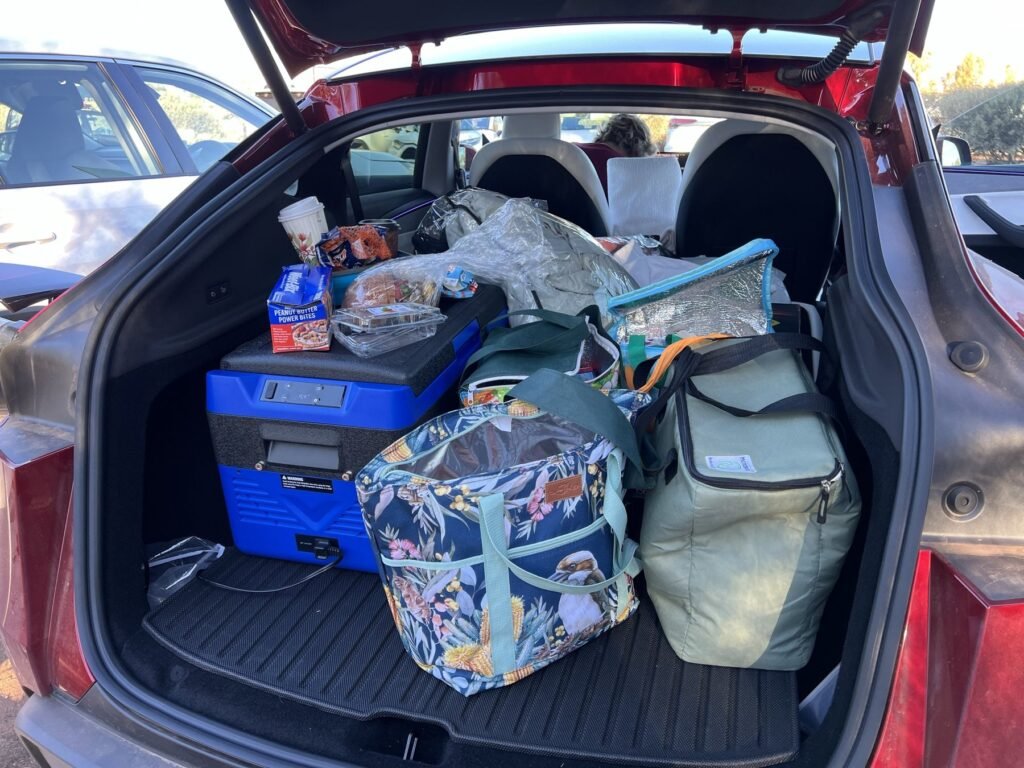
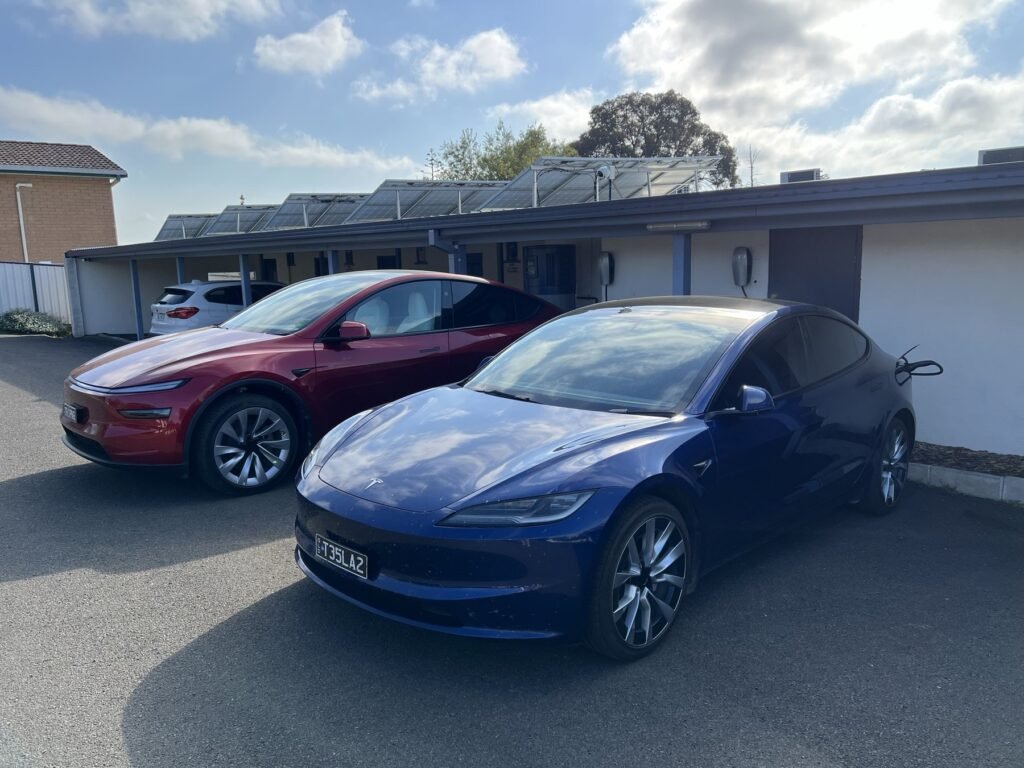
In May 2025, the Model 3 was replaced by a Model Y “Juniper”, the rear-wheel-drive Standard Range version. Its doors are easier to get in and out of, and it has more room for a camping setup. A 12-volt fridge runs in the boot.
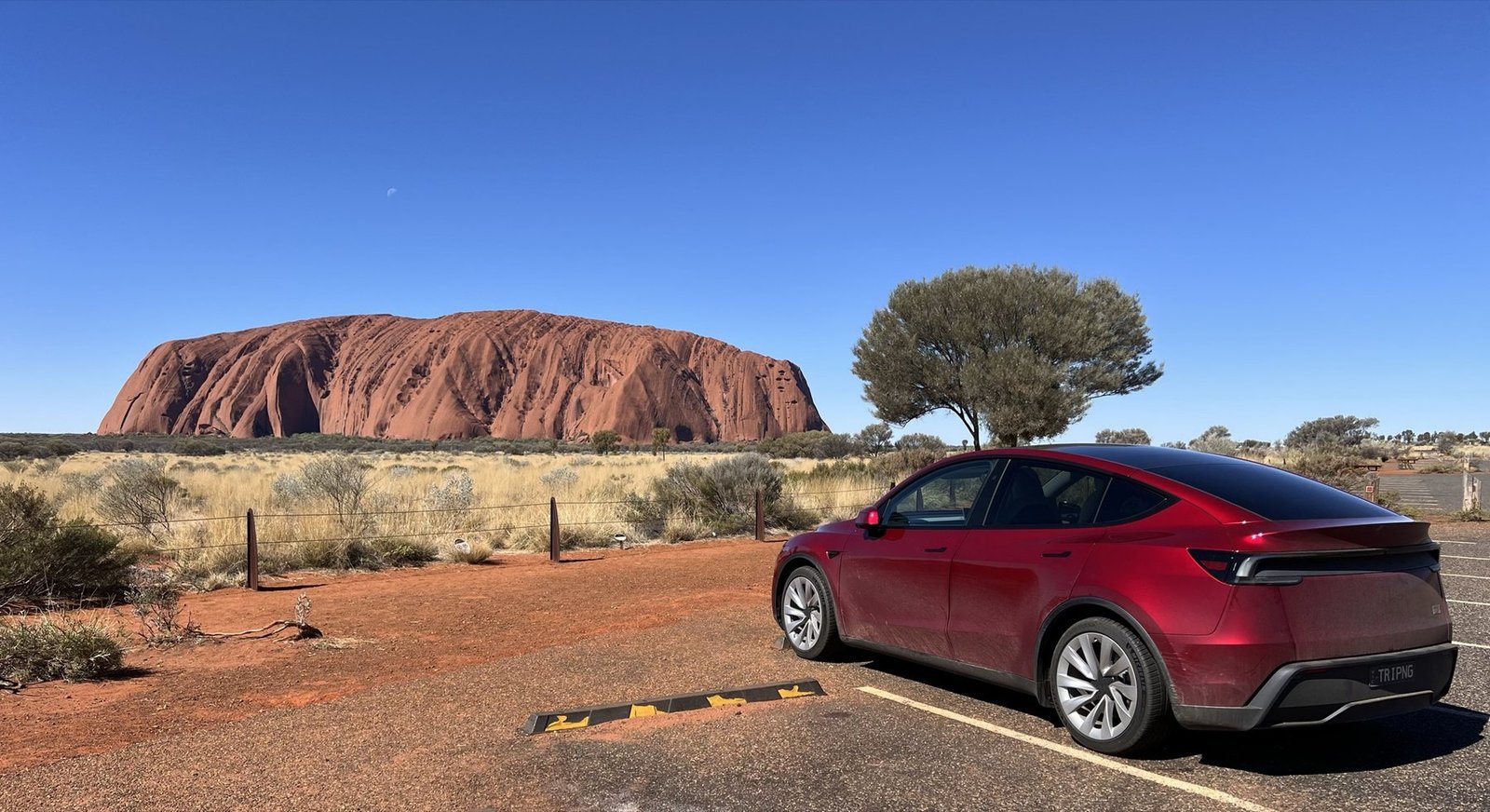
Ten weeks later, they took it to Uluru.
The Stuart Highway test
The round trip was 5,519 km over 19 nights, in the shortest-range car Tesla sells. It averaged 161 Wh/km.
The Stuart Highway turned out to be the hardest charging of any trip they’ve done. One leg, Pimba to Coober Pedy, finished with 2% left in the battery.
At Glendambo, the only charger is a 7 kW unit running off the town’s diesel generator. It wouldn’t start either time they passed through.
In total, 19 of their plug-ins on that trip delivered nothing, and 12 of those were at Glendambo. On the way home, a local named Chris reset the charger for them.
“There’s almost always a plan B for an EV,” Tom wrote. “Any power point will do, albeit slow.”
He also noticed the irony. “While we were getting the charger rebooted in Glendambo, the service station there had also just run out of diesel, so other motorists had to just wait.”
Motels that throw in the fuel
Some of the best charging they found didn’t come from charging networks at all.
In September 2026, they drove from Maclean, near sea level, up the Great Dividing Range to Armidale. At 980 metres, Armidale is Australia’s highest city. The Armidale Inn charged $130 for the night.
“That includes a free tank of fuel,” Tom wrote, “well, technically a full battery charge, and morning continental breakfast.”
What 2,800 charging sessions show
This is where Tom’s records are most useful.
Fewer than one charge in 17 was a fast charge.
“It’s been a small share of our charging,” Tom says, “and it hasn’t yet stopped us going somewhere we wanted to go.”
He won’t give a single cost-per-kilometre figure, and he explains why. “Most of it happens at home behind 13 kW of solar and three Powerwalls, so the cost isn’t really a cents-per-kWh number. It’s solar we’d otherwise have exported.”
For a rough comparison, here is a Techwheel estimate, not Tom’s. Driving their 137,000 Australian kilometres in a petrol car using 8 L/100 km would take about 11,000 litres. At $2 a litre, that’s around $22,000 in fuel.
Seven lessons from the road
Read enough of the 1,612 posts and the same habits keep coming up.
- Plug in whenever you park. “As usual, whenever I park the car, I aim to plug it in,” Tom wrote in Bright. A few minutes while picking up dinner adds up.
- Book places to stay that have charging. A motel with a wall charger fills the battery while you sleep, which matters more than any highway fast charger.
- Always have a plan B. A standard power point is slow, but it works. On the Stuart Highway, it was the difference between waiting and moving.
- Reliability matters more than charger numbers. Their outback problems were broken or offline chargers, not missing ones. In 2025, the Pimba charger went down in a blackout and one at Erldunda failed days after they used it.
- Carry RFID cards for each charging network. Apps and phone reception fail. Tom ordered Evie and Chargefox cards after an app wouldn’t connect in Kyneton.
- Tell the car where you’re going to charge. If the charger is set as the destination, the car warms the battery on the way. In Bright, that meant 180 kW one day and about 90 kW the next day, when he forgot.
- Pack less than you think. Their whole first year fitted in the boot and footwells of a Model 3.
Where they are now
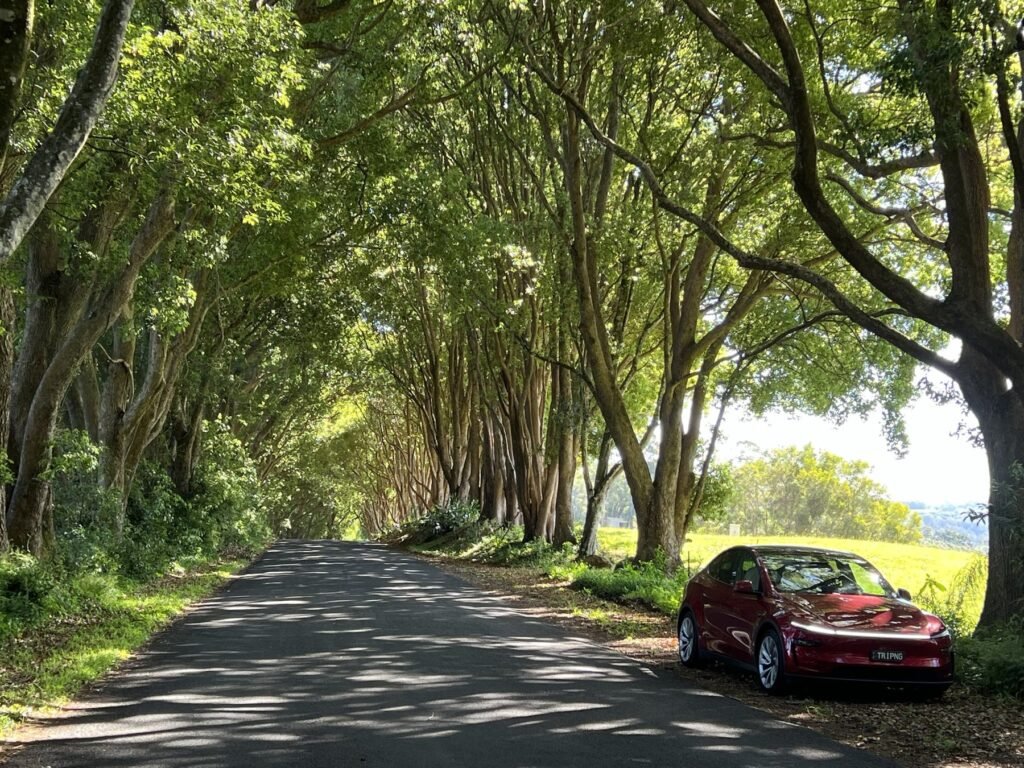
Four years on, Tom and Fran are back on the NSW coast as visitors. Their September 2026 posts follow Thunderbolts Way in the mist, a tunnel of trees on Federal Drive near Byron, and lunch with family in the Hunter Valley.
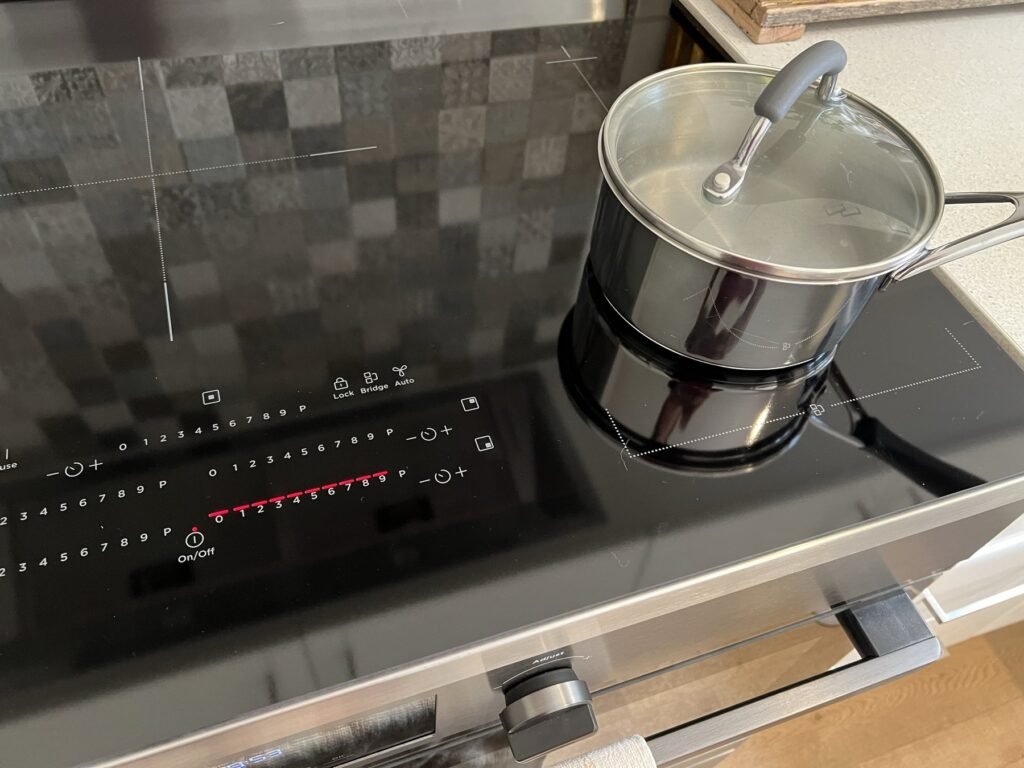
There’s a “TRIPNG” plate on the back of the car. The induction cooktop at home in Emerald is two months old.
Post 1,613 is presumably being written somewhere between chargers.
Got an EV, solar, or a home battery?
Share your real-world setup in the TechWheel Community Survey — it takes about five minutes and powers free, independent research for Australian households. We feature standout community setups in deep-dive case studies just like this one.
🔒 100% independent • No sales calls • Aliases and privacy fully respected
Frequently asked questions
Did they really live in the car for a year?
They lived on the road, not always in the car. They packed a bed and a tent, and also stayed in motels, holiday rentals and with family. They had no house from December 2022 until Christmas Eve 2023.
How can you drive 145,000 km with only 159 fast charges?
Most charging happens while the car is parked anyway, at home, overnight at a motel, or during a meal. Fast chargers are mainly for long days on the highway. Even then, Tom and Fran’s 159 fast-charge sessions supplied about a quarter of their energy.
Is the outback ready for EVs?
It’s possible, but it isn’t easy yet. On their 2025 Stuart Highway trip, 19 plug-ins delivered nothing and one leg ended on 2%. Tom’s verdict was that the infrastructure is “getting better, but the drive up the Stuart Highway isn’t quite there yet,” and that reliability is what needs fixing.
Tom and Fran’s full archive, including 1,612 posts, a searchable map and every charging stop, is at eTripping.au.