I drove a Tesla Model Y 40,000 km in Australia — my fuel bill was just $713 thanks to solar and home battery
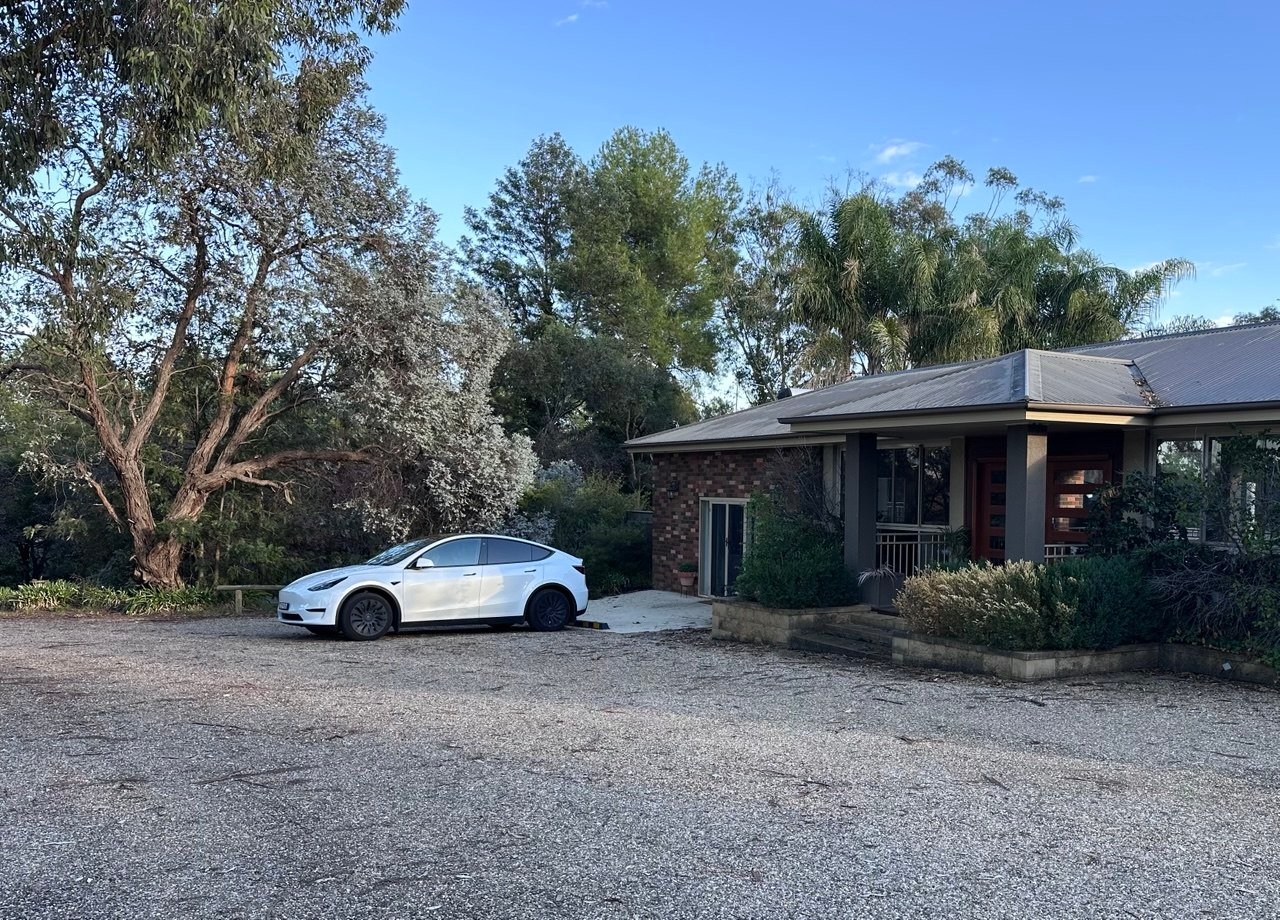
*Home charging covered by daytime solar + off-peak grid power
When prospective EV buyers evaluate switching from a petrol car to an electric vehicle, the most common question is: “What will it actually cost me to run in the real world over 40,000 km?”
Online forums are full of conflicting opinions. Some people claim EV charging is practically free, while others warn that fast charging on highway road trips gets expensive.
What is the actual reality for an average family?
Picture the typical Australian family lifestyle: you use your primary car for daily city commuting (work runs, school drop-offs, weekend groceries), and you take 1 to 2 family interstate road trips per year during school holidays along major highway corridors like the Hume or Pacific Highways.
In this real-world report, we are examining 40,000 km of driving in a Tesla Model Y over 3+ years (2023 to 2026). My car’s lifetime dashboard readout shows an exact average consumption of 150 Wh/km (15.0 kWh / 100 km) across all 40,000 km.
The Upfront Revelation: How Often Do You Really Fast Charge?
Over 40,000 km across 3+ years, how many times did I actually need to stop at a fast DC Supercharger?
Just 41 times in over 3 years.
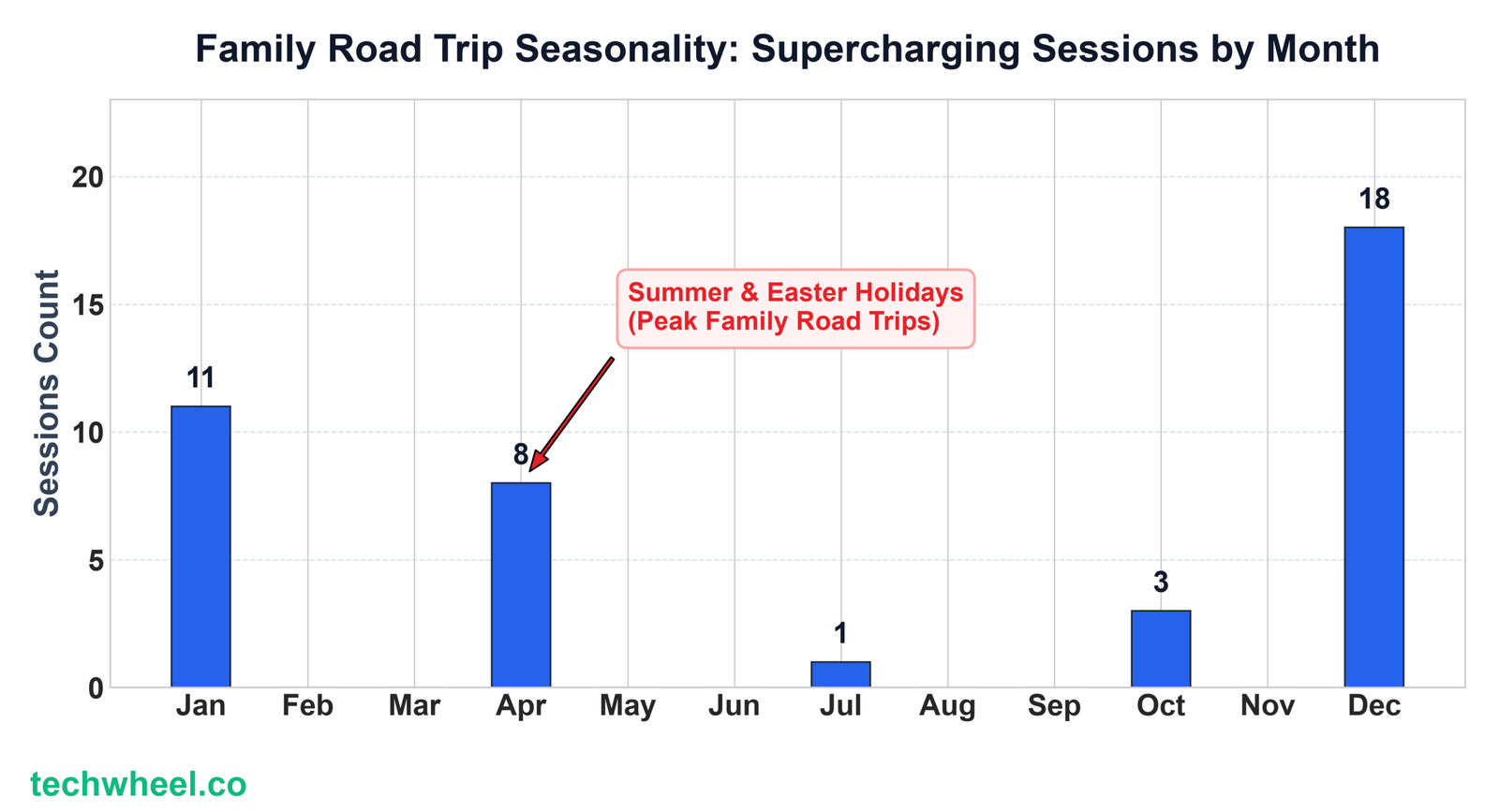
That averages out to about 1 session per month, heavily clustered around annual family road trips during Christmas/Summer holidays, Easter breaks, and October long weekends.
Unpacking the Dashboard Math: City vs Highway Efficiency
Why is it important to separate highway driving from city driving?
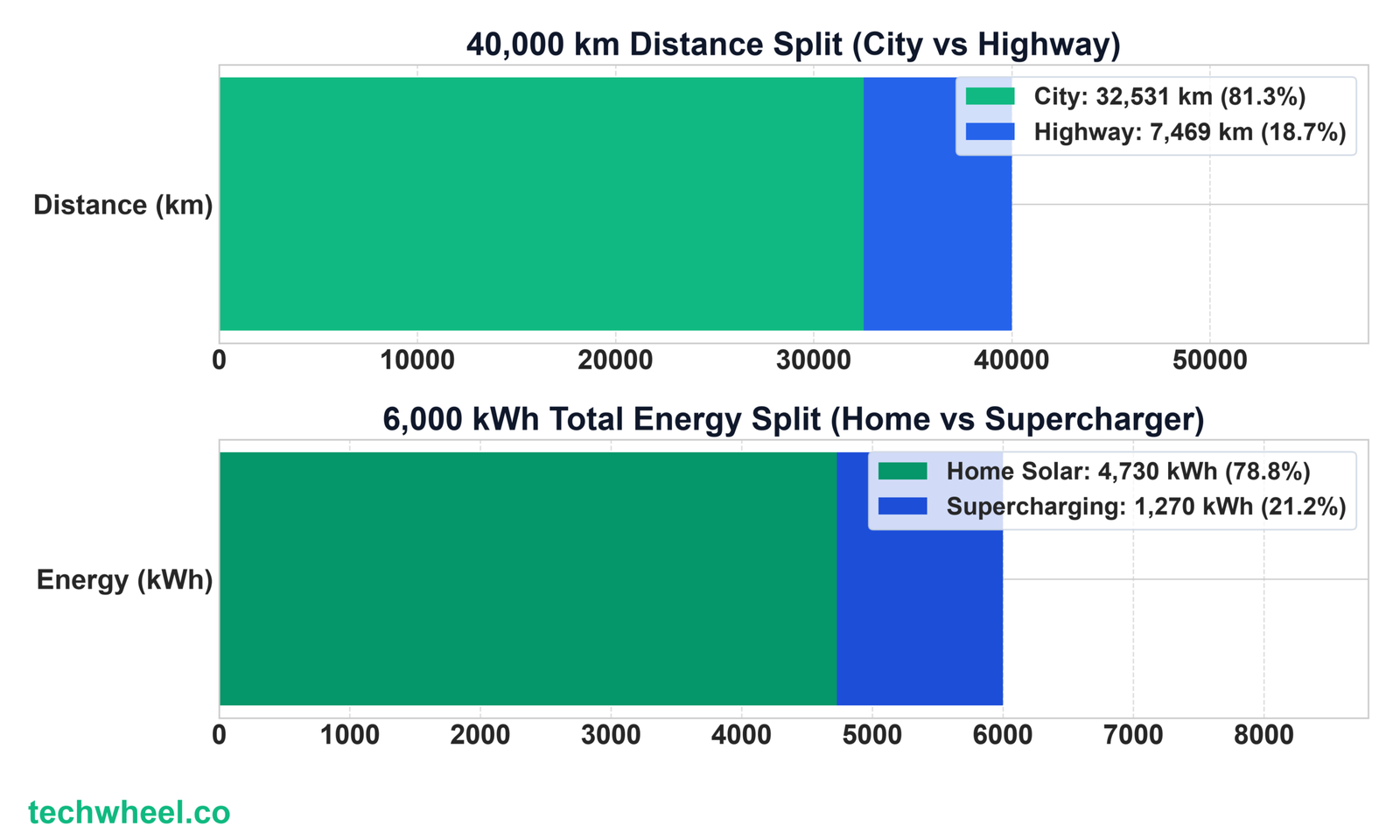
On high-speed highway road trips at 110 km/h, wind resistance increases consumption to ~170 Wh/km (17.0 kWh / 100 km). Conversely, in urban city traffic, lower speeds and regenerative braking lower consumption to ~145.4 Wh/km (14.54 kWh / 100 km). Combined across 40,000 km, total energy consumed is 6,000 kWh, which matches the car’s exact lifetime dashboard average of 150 Wh/km (15.0 kWh / 100 km)!
| Driving Environment | Real Efficiency | Distance Travelled | Share of Distance | Energy Consumed | Share of Energy | Primary Charging Source |
|---|---|---|---|---|---|---|
| City / Daily Commuting | 145.4 Wh/km (14.5 kWh/100km) | 32,531 km | 81.3% | 4,730.33 kWh | 78.8% | Rooftop Solar / Home Charger |
| Highway Road Trips | 170.0 Wh/km (17.0 kWh/100km) | 7,469 km | 18.7% | 1,269.67 kWh | 21.2% | Tesla Fast Superchargers |
| LIFETIME COMBINED | 150.0 Wh/km (15.0 kWh/100km) | 40,000 km | 100.0% | 6,000.00 kWh | 100.0% | 81% Home / 19% Supercharger |
Real-World 3-Year Fuel Cost Comparison
How does our real-world EV fuel bill compare to an efficient petrol family SUV (getting 7.0 L / 100 km combined at $1.95/L Unleaded)?
To keep the comparison 100% fair, all EV scenarios assume the exact same 81.3% city / 18.7% highway driving split (32,531 km city + 7,469 km highway across 41 Supercharging stops)!
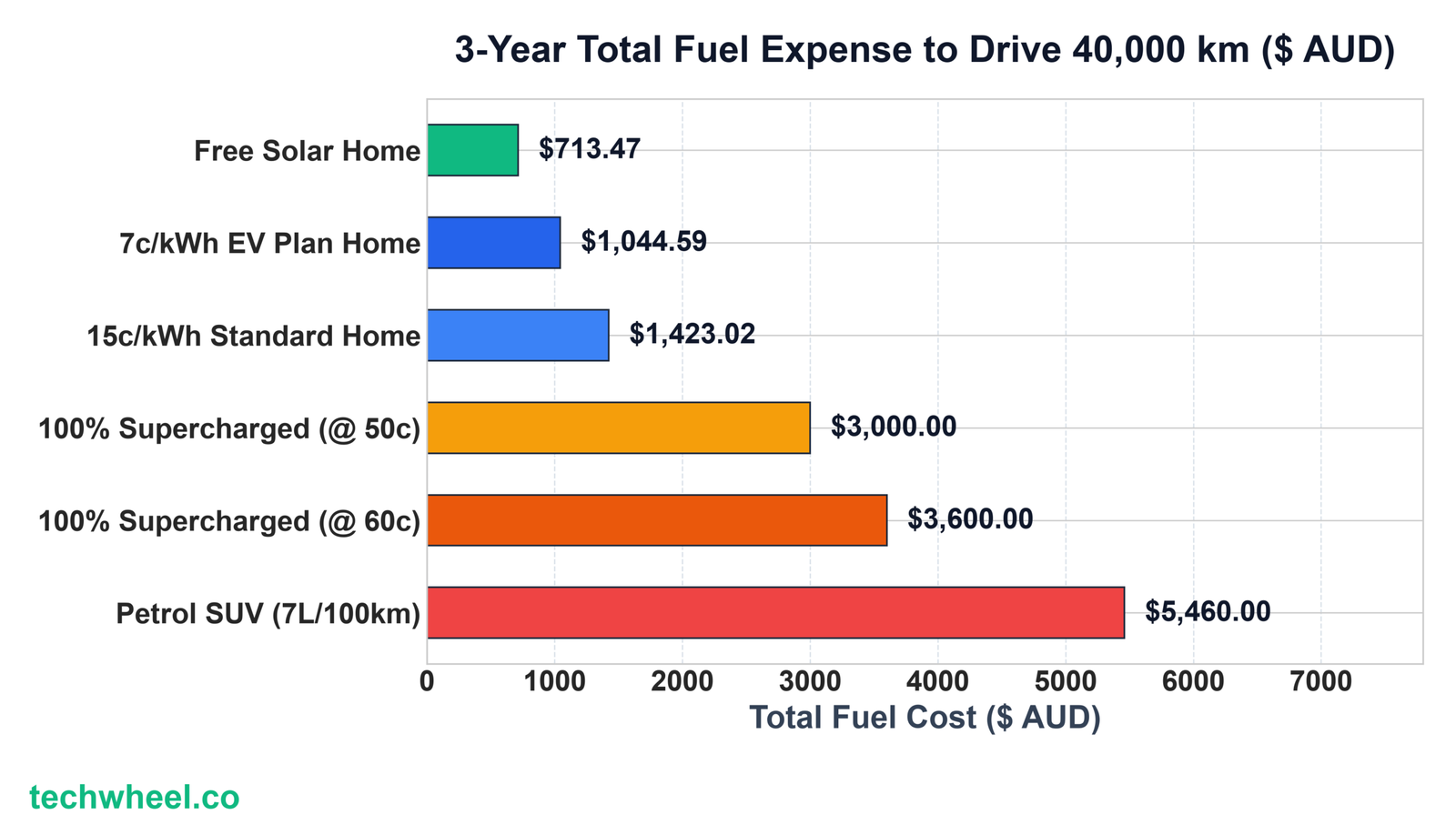
| Vehicle & Charging Scenario | Home Charging Rate | 3-Year Fuel Cost | Running Cost / km | Cost / 1,000 km | 3-Yr Savings vs Petrol |
|---|---|---|---|---|---|
| ☀️ Free Solar Home | $0.00 / kWh | $713.47 AUD | 1.78 c / km | $17.84 | Saved $4,746.53 |
| 7c/kWh EV Plan Home | $0.07 / kWh | $1,044.59 AUD | 2.61 c / km | $26.11 | Saved $4,415.41 |
| 15c/kWh Standard Home | $0.15 / kWh | $1,423.02 AUD | 3.56 c / km | $35.58 | Saved $4,036.98 |
| 100% Supercharged (@ 50c/kWh) | Commercial Fast Charge | $3,000.00 AUD | 7.50 c / km | $75.00 | Saved $2,460.00 |
| 100% Supercharged (@ 60c/kWh) | Commercial Fast Charge | $3,600.00 AUD | 9.00 c / km | $90.00 | Saved $1,860.00 |
| ⛽ Petrol SUV (7L/100km @ $1.95/L) | Petrol ($1.95/L) | $5,460.00 AUD | 13.65 c / km | $136.50 | Baseline |
What Are Road Trips Really Like? (Session Telemetry)
Across 41 Supercharging sessions logged over 3+ years:
⏱️ Average Charging Stop Duration: 20.6 minutes
⚡ Average Energy Added per Session: 30.97 kWh (~182 km highway range)
💵 Average Cost per Session: $17.40 AUD
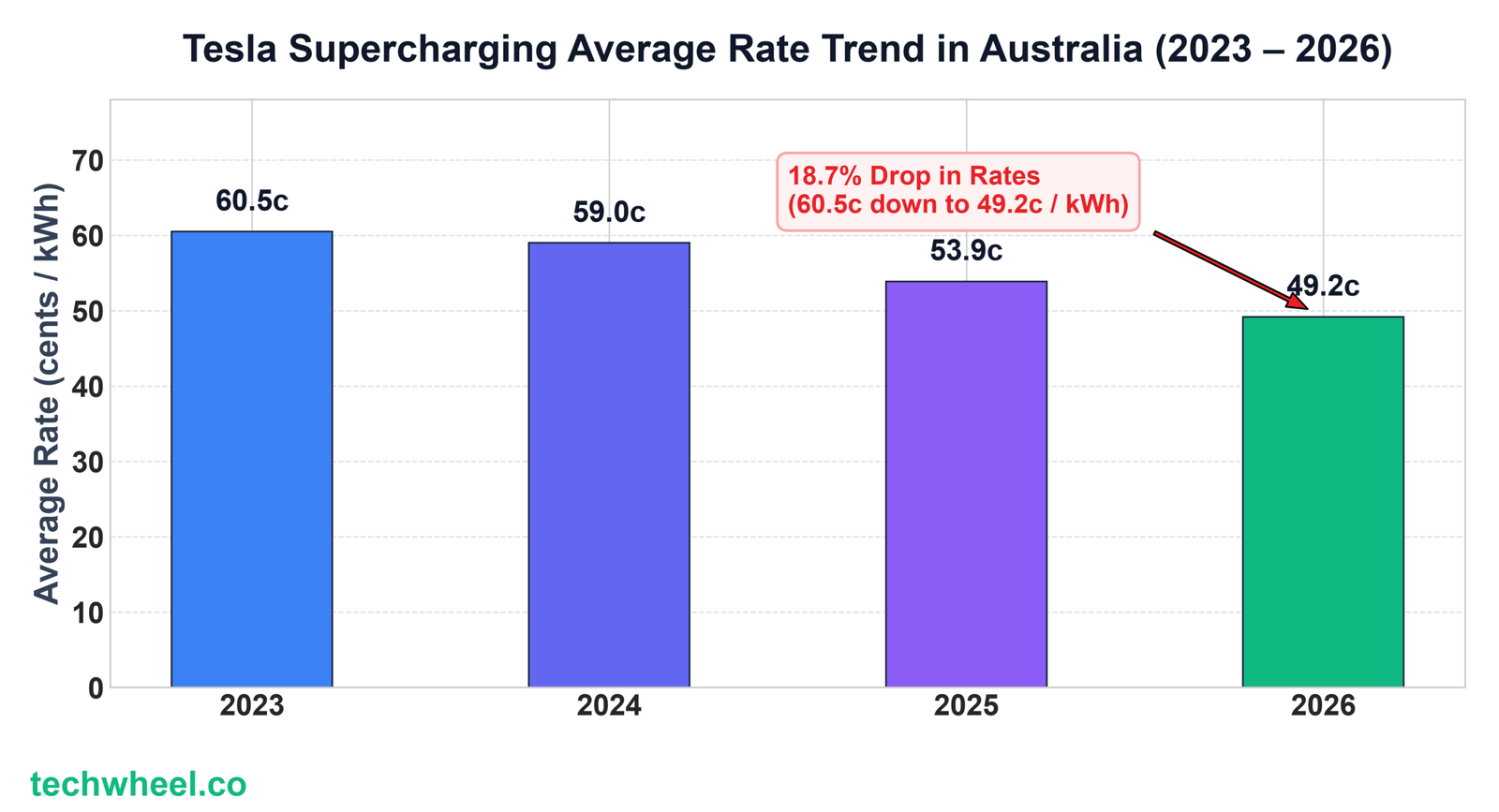
Supercharging rates at Tesla network along Australian highway corridors have actually dropped 18.7% over the last 3 years:
Final Takeaways for Prospective & Existing EV Owners
Daily Convenience: 81.3% of all driving is charged at home overnight. You start every morning with a “full tank” without ever visiting a petrol station.
Road Trip Rest Breaks: A 20-minute Supercharging stop matches restroom and coffee breaks perfectly.
Potential Savings: Saving over $4,000 in fuel across 40,000 km contributes to vehicle insurance, tyres, or family holiday accommodation.
Got an EV, solar, or a home battery?
Share your real-world setup in the Techwheel Community Survey — it takes about five minutes and powers free, independent research for Australian households.
💡 See how other Australian households manage their clean energy: